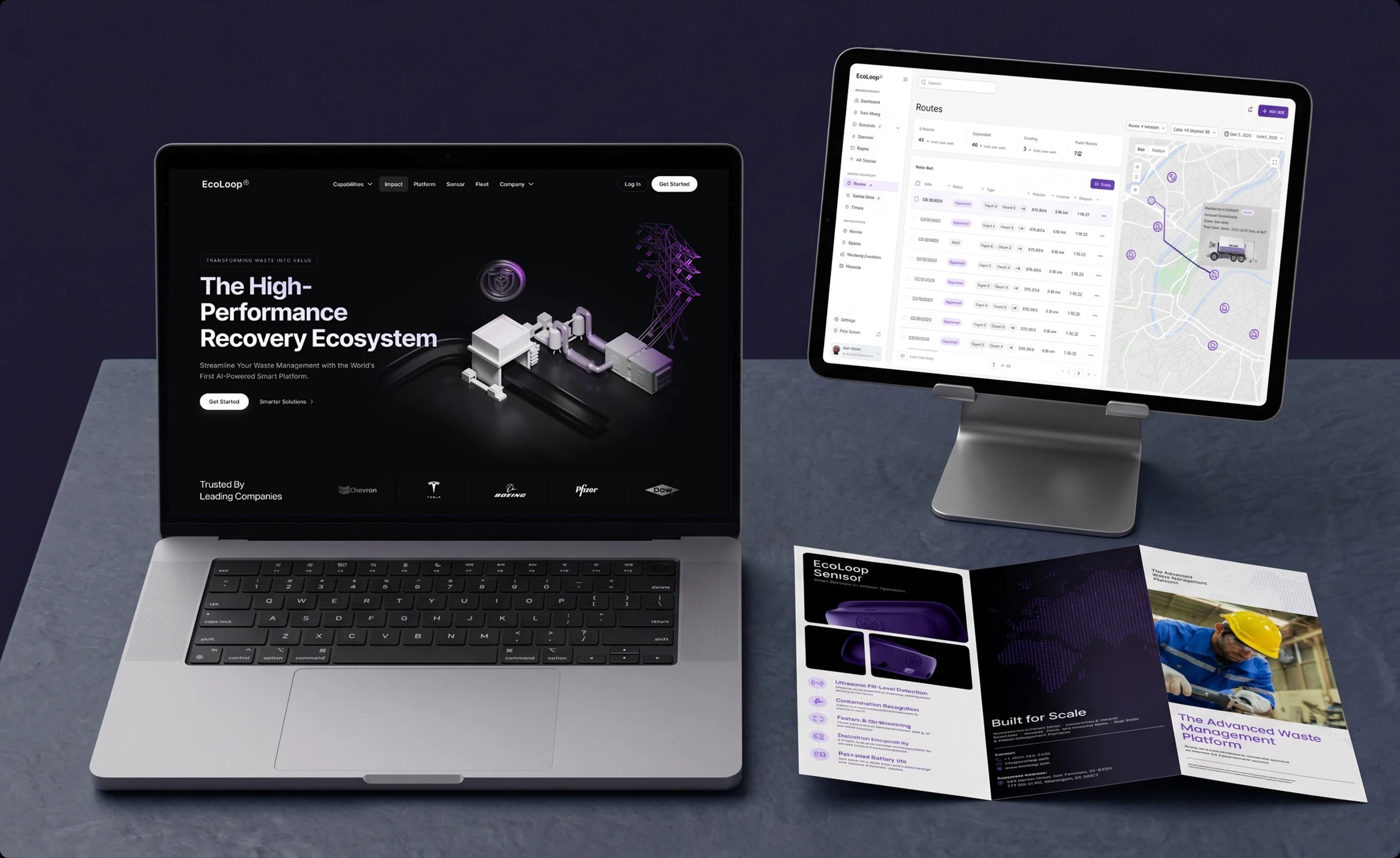
EcoLoop
A high-performance recovery ecosystem unifying compliance, operations, and ESG reporting into a single sustainability platform.
Rethinking the industry standard
Waste management websites historically look like heavy industrial brochures. Our strategy was to completely abandon that aesthetic and design the site exactly like a top-tier Silicon Valley SaaS product.
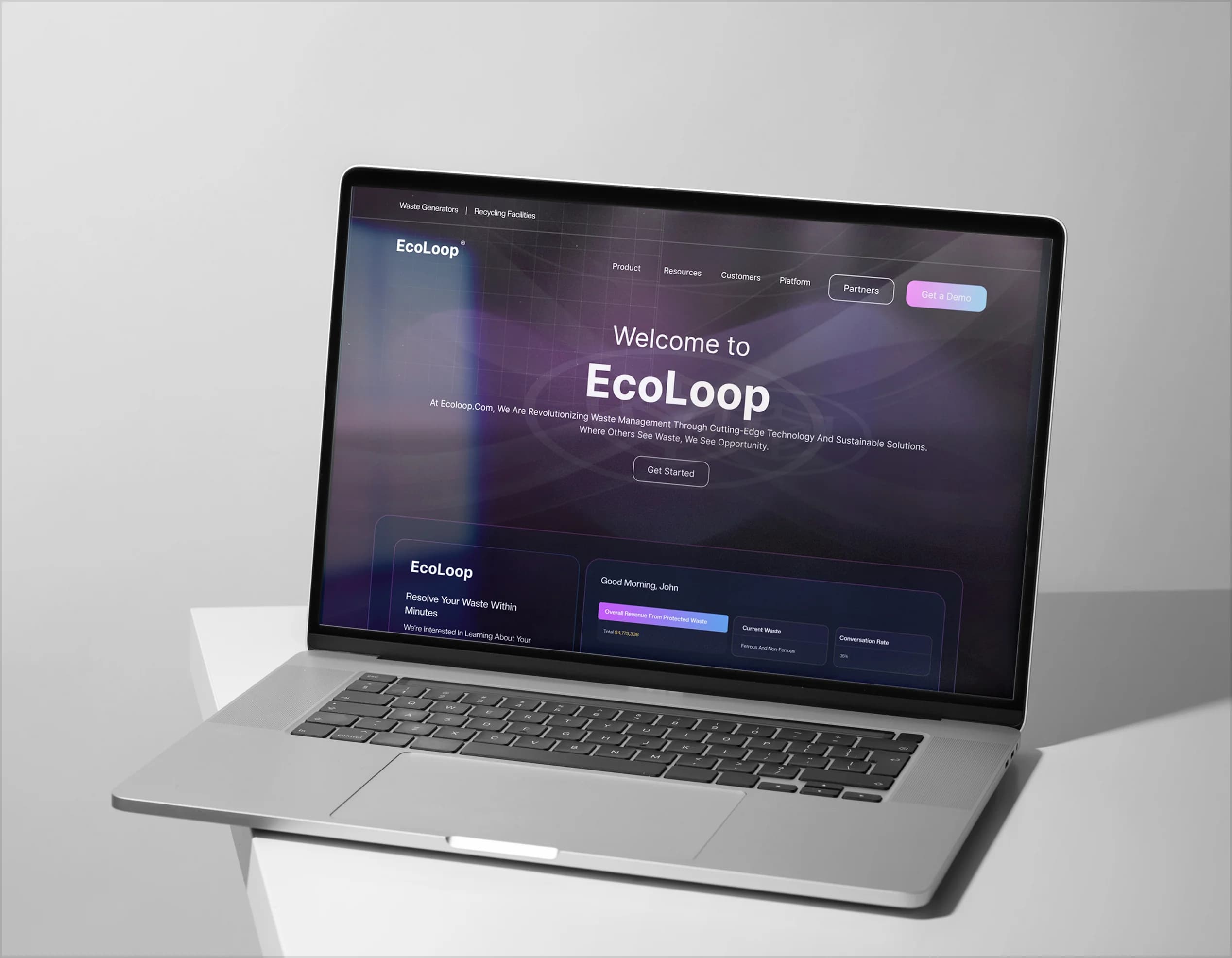
Industrial Aesthetics
Heavy use of generic stock photography of garbage trucks and landfills, making the company look like a standard hauling service.
Feature Dumping
Burying technical specifications in massive PDF downloads or dense paragraphs that procurement officers ignore.
Passive Contact Forms
A generic "Contact Us" page at the very end of the sitemap that yields low-quality, unqualified leads.
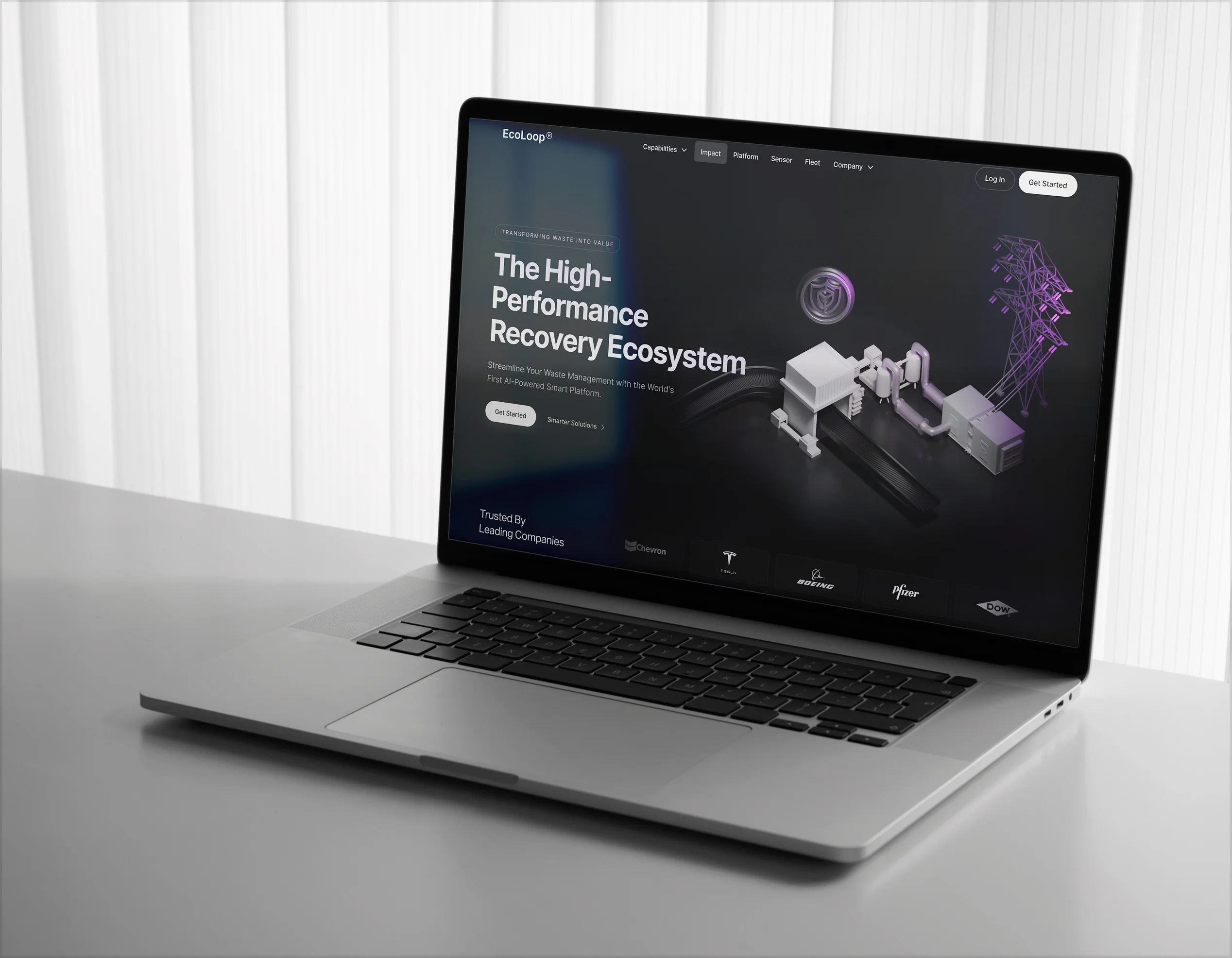
Premium "AI-Tech" Visuals
Strict dark mode, deep purple glowing accents, and bespoke 3D renders of the IoT sensors to position the brand as an innovative leader.
Interactive Discovery
Translating complex data flows into digestible, scroll-triggered animations and interactive bento-box grids to retain executive attention.
Active Lead Generation
Sticky 'Request Enterprise Audit' CTAs that trigger an interactive qualification flow, directly increasing high-value B2B conversions.
Architecting the funnel.
Katalyst isn't a consumer app; it is a B2B enterprise engine. The UI didn't just need to look premium — it needed to actively address the distinct anxieties of three high-value procurement sectors to drive demo requests.
The Conversion Engine
The entire Information Architecture was flattened to support a strict, three-step UX logic designed to generate qualified leads.
Government Officials
City officials are risk-averse. They need absolute assurance of security, regulatory compliance, and scale before they will even consider signing a multi-year software contract.
Engineered dedicated vertical pages that surface ISO certifications, compliance badges, and massive data metrics (e.g., "1.2M Tons Processed") immediately above the fold to establish instant credibility.
Fleet Operations Managers
Logistics leaders are highly technical and ignore marketing fluff. They only care about routing efficiency, hardware durability, and software uptime.
Embedded actual UI dashboard snippets and custom 3D renders of the IoT sensors directly into the scroll experience. This allows them to "preview" the software's capabilities without needing to read heavy documentation.
Sustainability Officers
Corporate buyers need hard, exportable data to prove ROI to their executive boards regarding emissions reductions and circular economy mandates.
Designed dedicated "Waste-to-Energy" pages using bold, high-contrast bento-box layouts to highlight emission reduction percentages clearly, making the data highly scannable for C-suite presentations.
The core platform.
To properly establish enterprise authority, EcoLoop required immense depth. Scroll inside the mockups below to explore the detailed architecture of the primary marketing and conversion pillars.
The primary conversion engine, distilling massive data sets and IoT hardware specs into a digestible, high-impact narrative.

Designed specifically for logistics managers, integrating UI dashboard snippets directly into the scroll experience to prove real-time capability.

Data-heavy metrics highlighting emissions reduced and tons processed, targeted directly at corporate sustainability officers.

Highlighting the physical hardware. Cinematic lighting and 3D renders prove that the physical tech matches the software's sophistication.

Data without friction.
Enterprise clients don't read paragraphs; they read metrics. A specific challenge was designing modular data visualization cards that could scale across Fleet Logistics, Recycling, and Energy pages without breaking the grid.
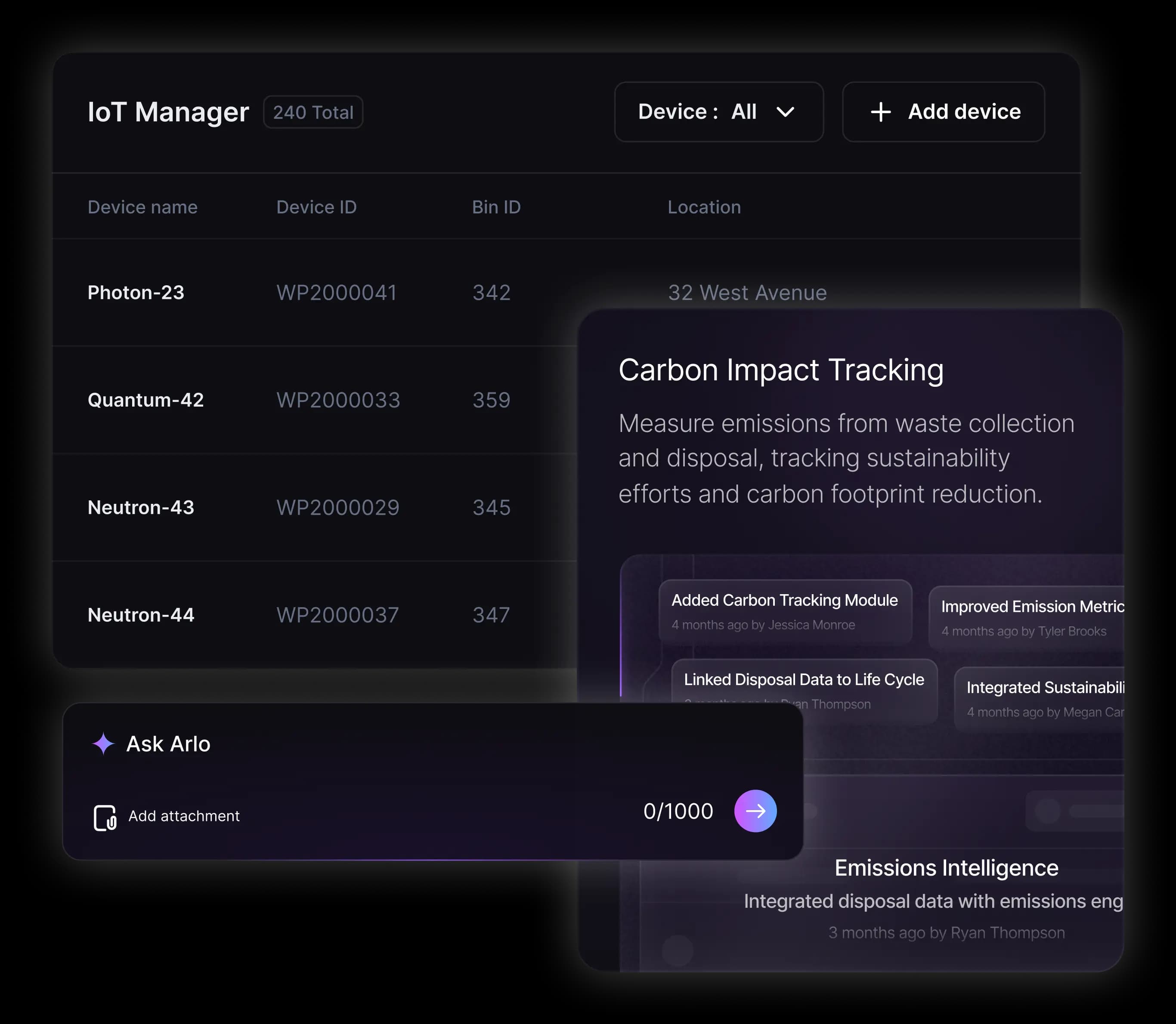
The Component Strategy
Instead of treating every data chart as a custom graphic, I built a rigid, responsive component library in Figma.
By standardizing the padding, the semantic color logic, and the typographic scales, we ensured the developers could generate 50+ unique data visualizations across the site seamlessly without writing custom CSS for each one.
Built for every screen.
From desktop command centers to on-the-go mobile dashboards — every surface was designed and tested across the full device spectrum.

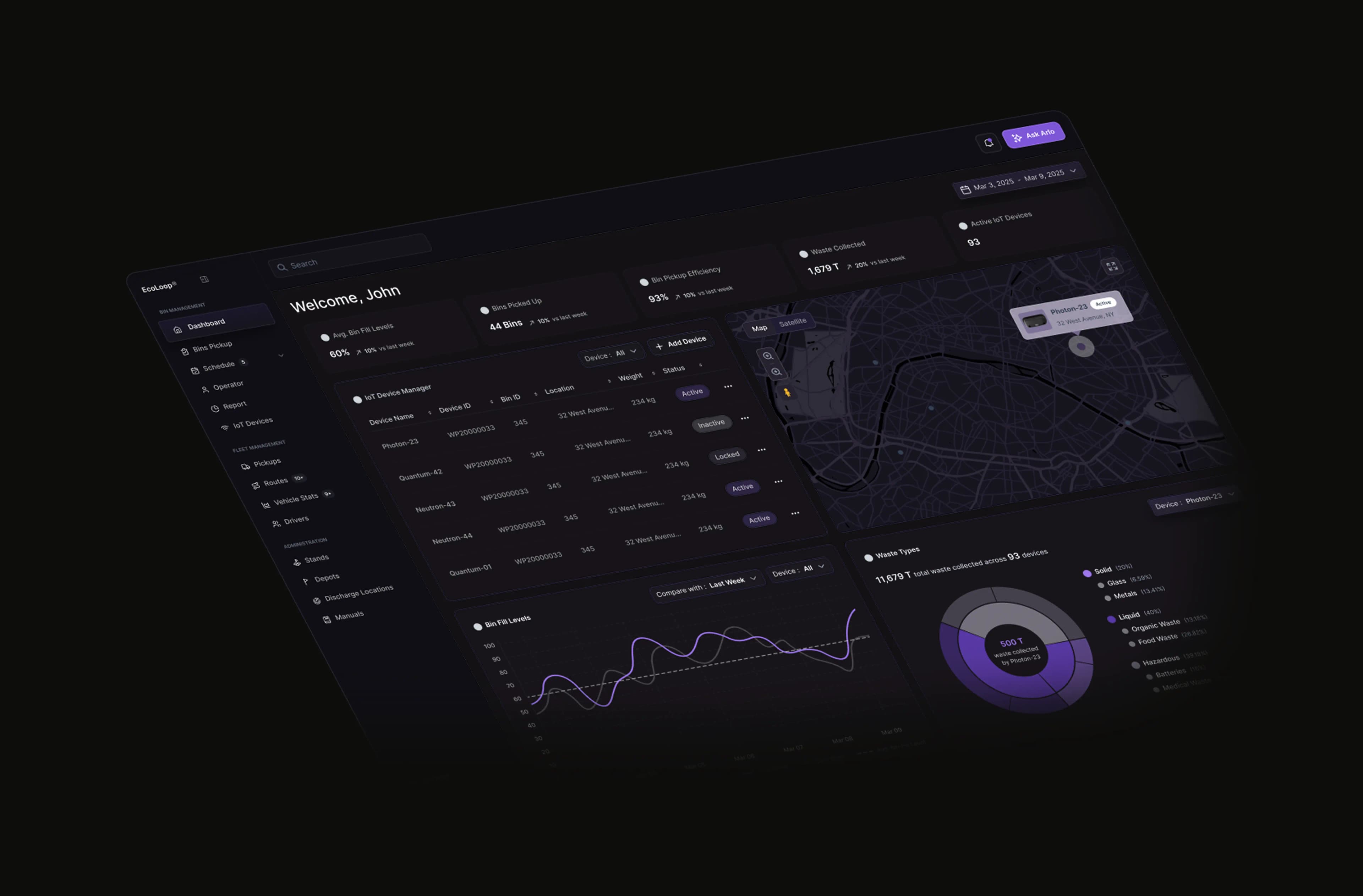
Architecting the Dashboard.
To prevent data paralysis, the interface relies on a strict modular structure. Explore the core functional zones of the command center below.
Collapsed Global Navigation
By moving the primary navigation to a collapsed left-hand rail, we maximize the horizontal screen real estate. This is critical for viewing complex data tables and expansive map visualizations without cramped horizontal scrolling.
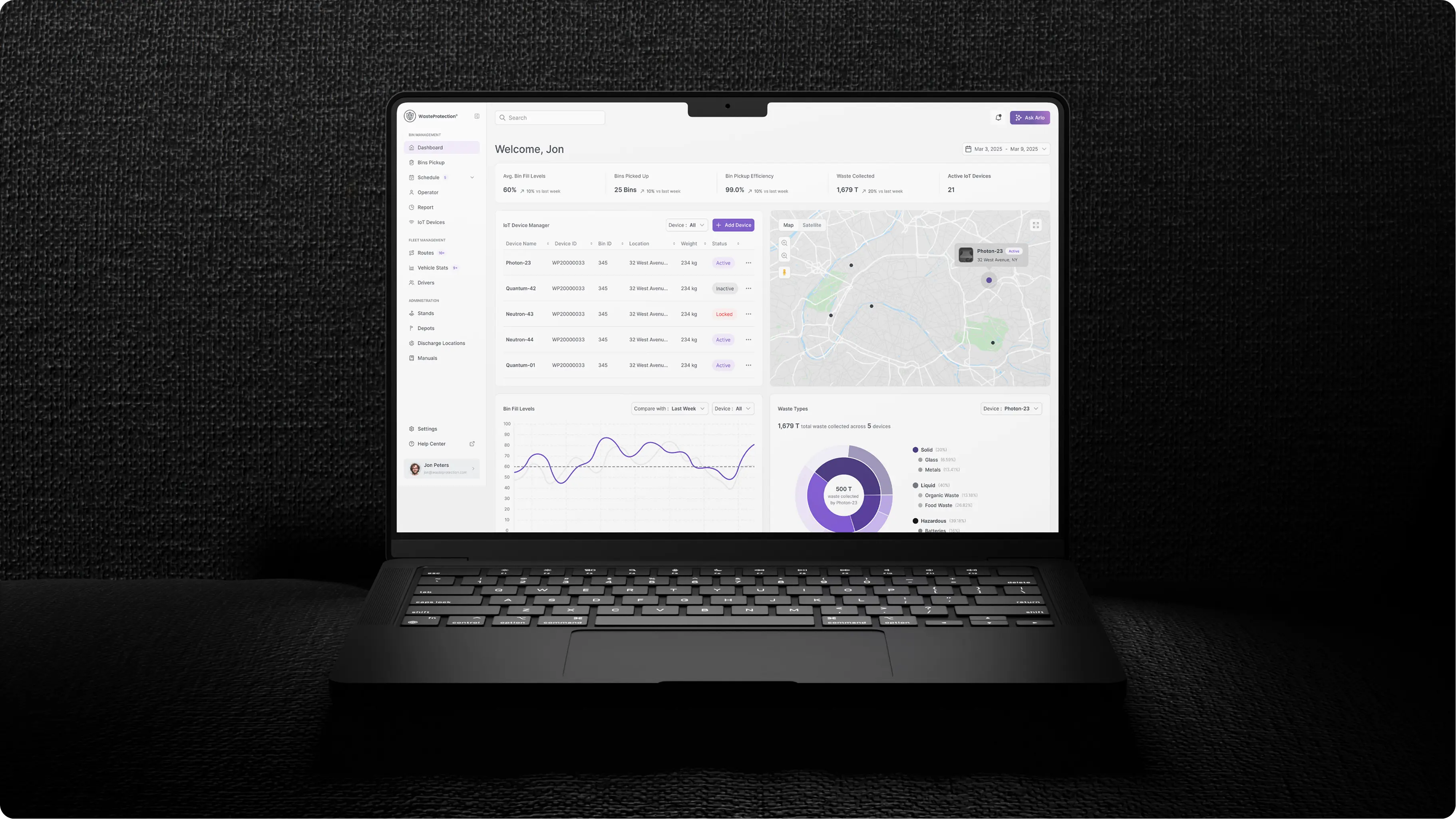
Designed for the dark.
Every surface — marketing site, investor deck, product dashboard, physical brochure — sits on a single dark-mode visual system. The result is a brand that reads as confident, technical, and unmistakably its own.
Pitching the Vision.
A cohesive brand cannot stop at the software interface. I was responsible for translating the complex EcoLoop architecture into a high-impact Investor Deck designed to secure Series-A funding.
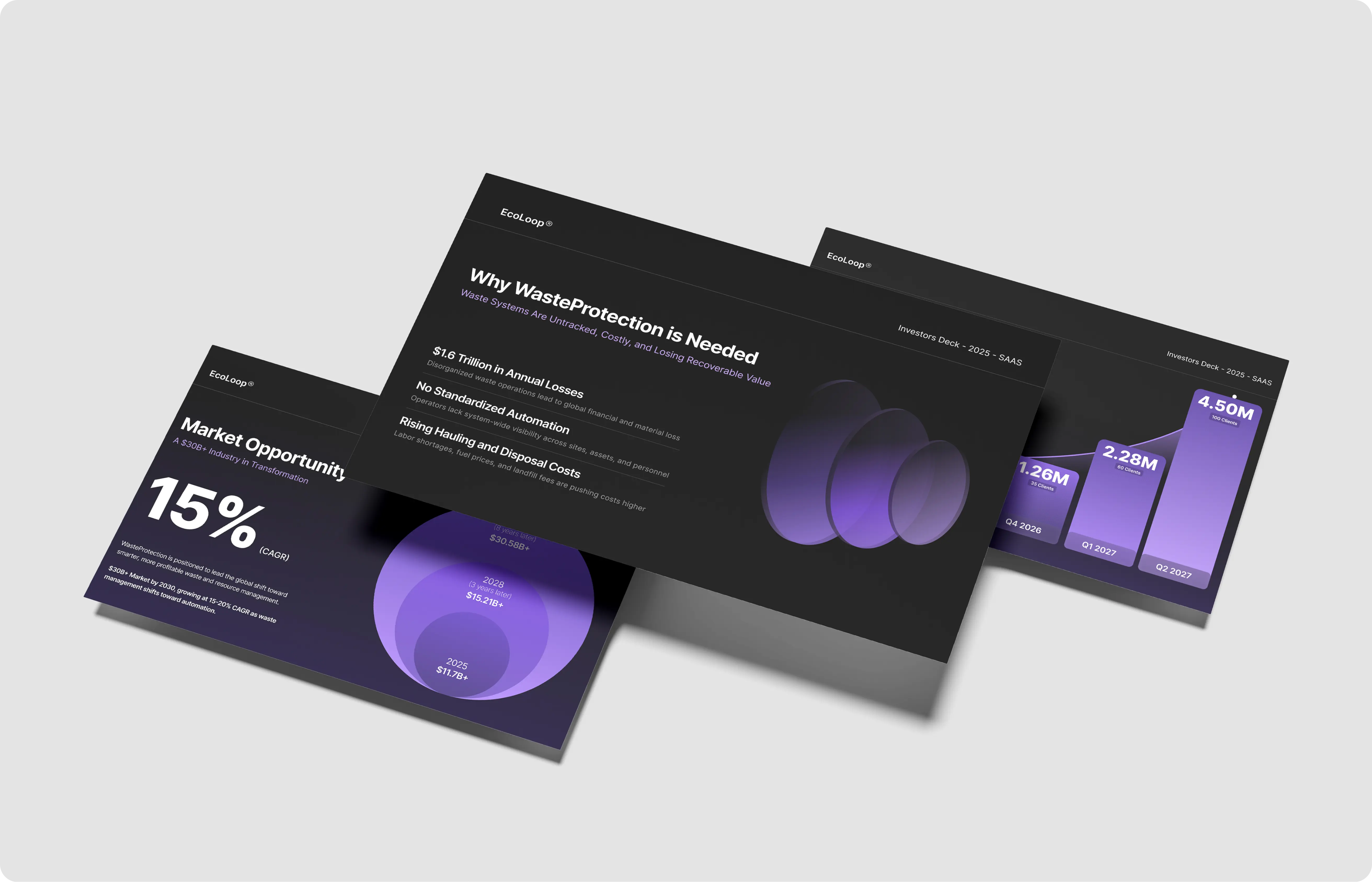
Visualizing the Value.
I translated the complex EcoLoop SaaS offering into an investor-grade pitch deck, ensuring the brand's premium dark-mode aesthetic was carried flawlessly into the boardroom.
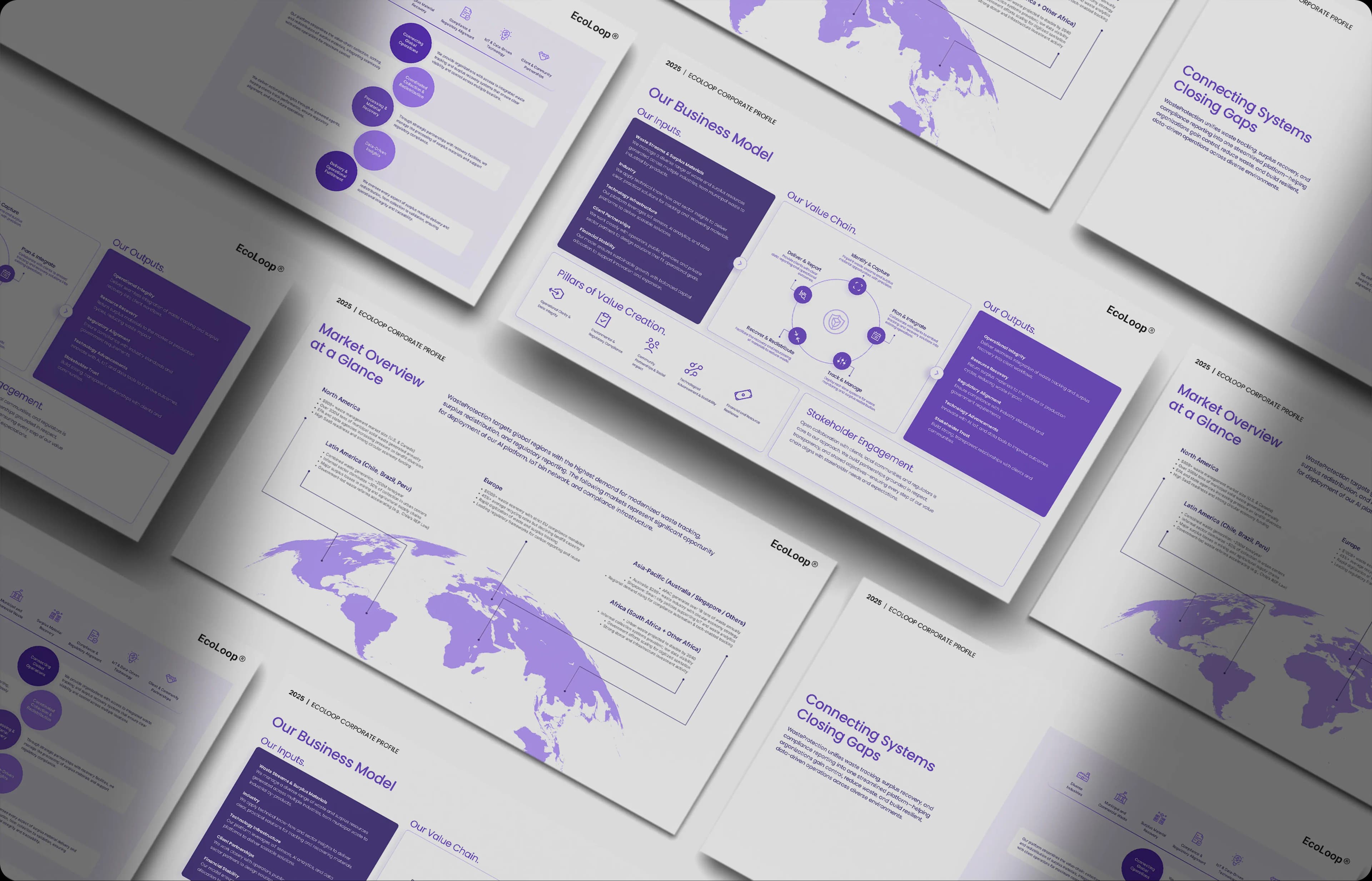
Tangible Design.
By utilizing dark, rich backgrounds and high-contrast photography of operational staff, the brochures ground the high-tech AI software in the reality of physical industrial labor.

Learnings
The biggest lesson was that designing for three distinct user groups requires constant prioritisation. Not every feature deserves equal weight in every context. Role-based progressive disclosure became the core pattern that made this work.
If I were to do it again, I'd involve field operators in design reviews from week one — they consistently surfaced the most expensive assumptions buried in our flows.